Cash for clunkers in Chicago
Is there still a cash for clunkers program?
No. The federal Cash for Clunkers program, officially the Car Allowance Rebate System, ran from July 1 to August 24, 2009, when its money ran out. Today, cash for clunkers means selling a worn-out car to a buyer: Junk Man Cash for Cars makes an offer on your Chicago clunker, tows it for free and pays you at pickup.
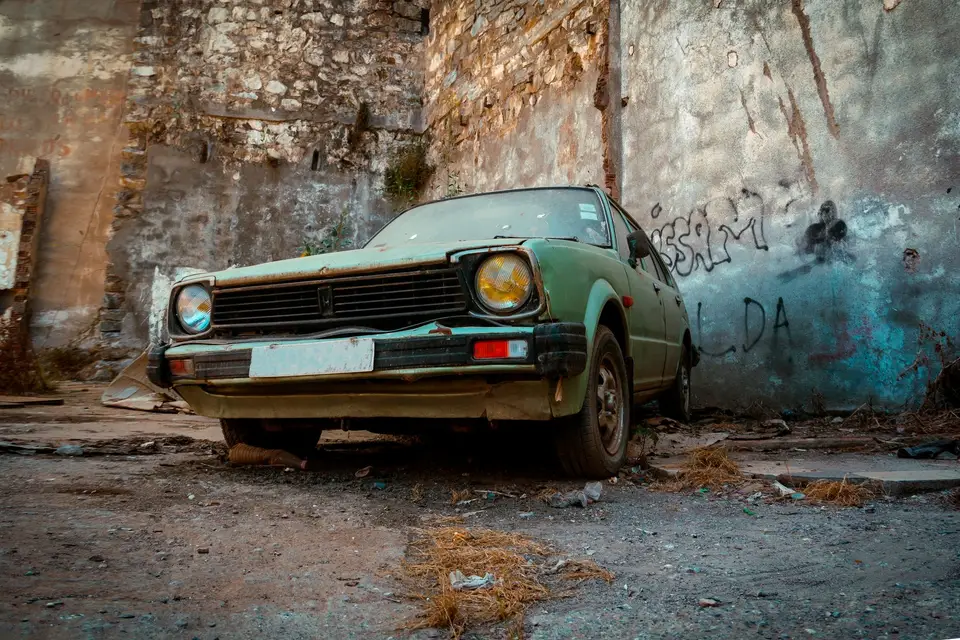
Every Chicago block has one: the car, pickup or minivan that still starts most mornings but drinks oil, leaks something green and has rust bubbling out of the wheel arches. Junk Man Cash for Cars buys that car. Whether it drives in or gets dragged out, we make an offer, tow it for free and pay you at pickup.
What makes a car a clunker
It isn’t age alone. Plenty of 20-year-old cars are worth fixing. A clunker is a car where the money has stopped making sense:
- Rust you can see through. Chicago’s salted winters eat floor pans, rocker panels, brake lines and subframes. Once rust reaches the structure, the repair usually costs more than the car.
- High mileage and everything that comes with it. Worn suspension, a slipping transmission, a timing chain that rattles on cold starts, oil between changes.
- The repair quote that ends the debate. A transmission, a head gasket or a catalytic converter priced at more than the car could sell for.
- One repair too many. The car that’s been back to the shop three times since spring and has a new warning light every month.
- Missing pieces. Stripped parts, a broken window taped over, no spare, no jack, a bumper held on with zip ties.
If you recognize your car in two or more of those, it’s a clunker, and it’s the kind of car we buy.
Running clunkers, yes. Good used cars, no.
We should be straight about this. We price every car as a junk car: what the body, the working parts and the metal are worth. That’s the right price for a clunker. It’s the wrong price for a clean, reliable car with years left in it. If yours runs well and looks decent, a private sale or a dealer trade-in will almost certainly pay you more.
Not sure which side of that line you’re on? Our guide to whether a car is worth fixing first walks through the numbers: the repair quote, the car’s value after the repair, and its value as it sits. If high mileage is the main question, read how to sell a high-mileage car before you decide.
The Cash for Clunkers program, briefly
The name comes from a real federal program. The Car Allowance Rebate System, run by the National Highway Traffic Safety Administration, gave buyers a rebate on a new, more fuel-efficient car when they traded in an old one. It started on July 1, 2009 and ended on August 24, 2009, when the funds ran out. The traded-in cars were scrapped; Wikipedia’s account puts the total at 677,081 vehicles.
There’s no federal program like it today. When you see “cash for clunkers” on a sign or a search result now, it’s a private buyer offering to purchase old cars. That includes us.
What selling a clunker to us looks like
Four steps, the same as every car we buy:
- Send the details. Year, make, model and title status in the form, then your name, phone and where the car is.
- Get the offer. We call you with a number. You can take it, think about it or pass.
- Choose a day. Same-day pickup is often possible.
- Hand it over. The truck hauls it away on our dime, and your payment is handed over before it rolls off.
No title in the drawer? We can still help. Say which papers you’ve got, whether that’s a bill of sale, the registration or an insurance card, and we’ll confirm on the call what Illinois rules accept for your scrap sale. That’s how cash for cars in Chicago works when the car is past saving but not past selling.
Questions sellers ask
Does my clunker have to run?
No. A clunker that still drives and one that died in the driveway are both cars we buy. Tell us which one you have so the offer fits.
What counts as a clunker?
Any car that isn't worth fixing anymore: rust through the floor or rocker panels, a warning light nobody can clear, mileage well past 200,000, or a repair quote bigger than the car's value.
Should I trade it in at a dealer instead?
If you're buying from that dealer anyway, ask what they'll give you on trade and compare it with our offer. Take whichever number is better; there's no reason to pick before you know both.